

In my last post, I argued that AI threatens economic growth paths for low- and middle-income countries by endangering both manufacturing and service exports. If that’s right, the obvious question is ‘what should LMICs do instead?’
There’ve been many proposed alternatives. One way to think about these paths is that they are each a bet on a particular strategy that makes that industry competitive even in a world with highly capable AI. These generally fall into categories: selling some physical good that a country is endowed with (safaris), or it uniquely can produce (cocoa, geothermal energy); performing work that is symbiotic rather than competitive with AI (data labeling), or where AI is particularly weak (caretaking).
In order for them to be viable alternatives to manufacturing and service exports, they will need to not only earn revenues, and in hard currency, but also absorb workers at scale and include feedback loops that improve productivity and therefore wages in that sector over time.
The pattern across all of these paths is that, while they can bring in money, none of them can employ enough people in domestic work, doing a task where workers become more productive over time and demand can grow to absorb that productivity. As a result, some may soften the blow of AI automation, but none is likely to serve as a true alternative growth path.
Data labeling and verification
As AI potentially eliminates existing jobs by automating them, one strategy is to create new jobs to support AI itself. Models need enormous amounts of human input, and that input is both digital and wage-sensitive, so it flows to whoever’s work is cheapest. Data annotation hubs in Nairobi and Manila currently employ tens of thousands of people, and optimists see this as an opportunity for workers globally to capture some higher wages from the AI boom.
One form of this is data labeling, wherein workers help produce the labeled examples that models use to learn. This can look like drawing bounding boxes around pedestrians or traffic signs on videos to train self-driving cars, tagging violent posts to inform content filters, or ranking chatbot response quality to help models learn which answers people like. Another is verifying AI responses and catching failures in deployed models. In its final form, this looks like using humans to either supervise or work collaboratively with AI. For example, Presto Automation sold “AI” drive-through ordering to Carl’s Jr. and Checkers. They claimed 95% of orders needed no human input, but SEC filings revealed off-site agents in the Philippines were intervening in over 70% of interactions.
The problem is that this pathway is not durable. For one, a job that relies on no learned skills or sector-specific knowledge naturally invites underbidding. In Cagayan de Oro, per-task pay halved after 2022 as Remotasks moved projects to Kenya, Nigeria, and Venezuela in search of cheaper workers. On some projects, Filipino rates fell from $10 a task to under one cent. In March 2024, Remotasks shut down in Kenya, Nigeria, and Pakistan within a single month.
Work that involves supervising and validating AI output also naturally puts itself out of a job, since every human correction makes the model better. The demand that remains is migrating up-market, toward expert data from doctors, lawyers, and PhDs, which is to say toward workers rich countries have. In September 2025, xAI laid off some 500 generalist annotators, about a third of its data team, to hire specialist “tutors” instead.
Agriculture
One export where demand is stable and AI is unlikely to be able to produce it is food. Agriculture already employs half to two-thirds of workers in most low-income countries, and many of their climates are uniquely well-suited to producing popular exports — like cocoa, coffee beans, or mangos.
Through this path, countries could focus on moving beyond raw commodities into processing and branded products, capturing higher margins. For example, Kenya built a cut-flower industry worth over $800 million a year employing well over 100,000 people, and Côte d’Ivoire now grinds among the most cocoa of any country on earth.
A very interesting organization working on this is Exporters Without Borders. They’re currently backing founders to launch Madagascar’s first freeze-dried fruit industry. The island grows ~100,000 tons of lychee a year but exports only a fifth, and freeze-drying turns the rest into a $30/kg shelf-stable product.
This is an exciting intervention. That said, the two halves of the pathway (farming and processing) both have limitations. Farming employs enormous numbers of people, but when output per hour rises, the result is historically that labor leaves agriculture rather than more workers being hired given relatively capped demand for these goods. Processing is capital-intensive, employs few people, and is vulnerable to the same automation that manufacturing writ large is.
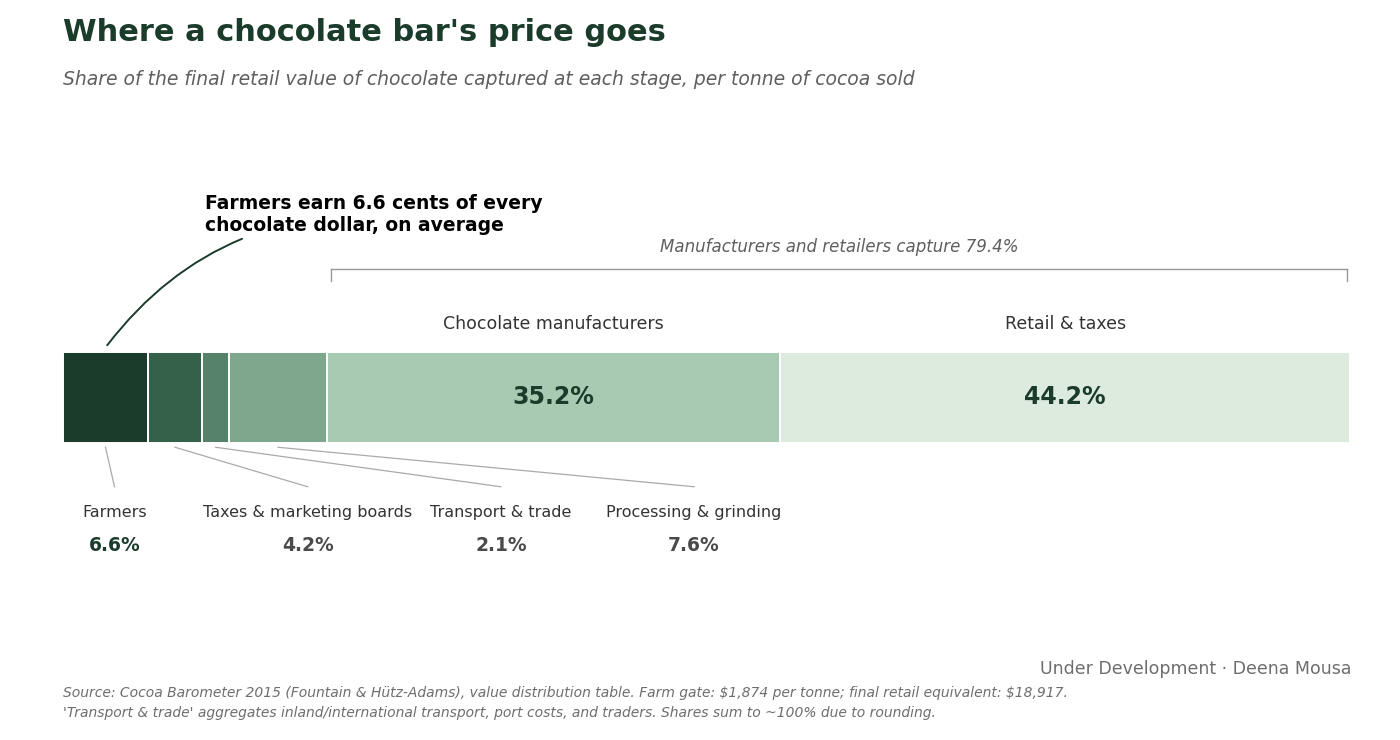
At best, the Madagascar plan produces a $5 million plant employing hundreds, which is not a replacement for manufacturing-led growth in a country of thirty million. Agriculture, even with downstream processing, cannot reliably employ a growing country at rising wages.
Tourism
Another thing countries have that AI cannot currently replicate is access to a sunny beach holiday, a historical site, a safari, or authentic pasta handmade by an Italian grandmother. Africa earned $42.6 billion in tourism receipts in 2024, 41% of its service exports, the highest share of any region. If AI were to automate many jobs, it ought to make some people much richer, and, since travel is a luxury good, demand for it would grow in that case.
This is all well and good, but not every country has natural attractions for foreign visitors. Some countries will be excluded from this path. In addition, the scale of the opportunity is not nearly enough to be a reliable growth path. All of Africa’s tourism receipts amount to roughly a seventh of what India earns from IT services alone. Gross receipts also overstate it given imported food, foreign-owned hotels, and foreign airlines claw back a large share. Estimates for small island economies put the leakage at more than half of every tourist dollar. As a result, the economies tourism has made rich are mostly microstates, like the Seychelles, or the Bahamas.
Productivity in hospitality also generally grows very slowly. Of the sectors BLS has tracked since 1990, accommodation and food services stands out as one of the very few where hours worked grew faster than productivity.
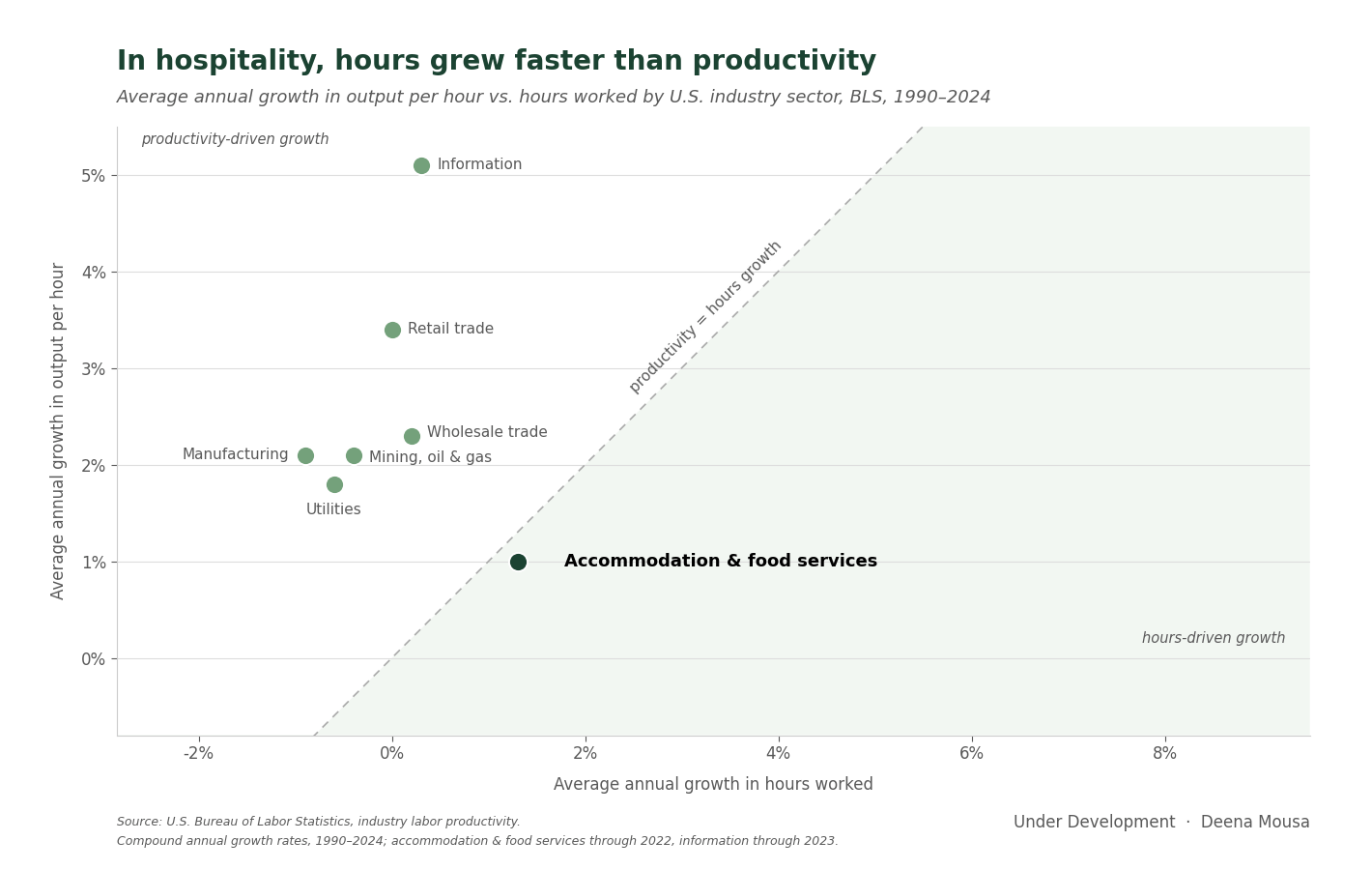
Although tourism seems to innovate constantly with things like helicopter safaris or underwater hotel rooms, these things increase revenue without necessarily raising the output per worker-hour. In most services, as the economist William Baumol put it in 1967, “labor is in itself the end product.” Luxury tourism actually advertises its staff-to-guest ratio, and more labor per unit of output is part of the appeal.
Although you can charge tourists more — Rwanda prices gorilla permits at $1,500 a day — this is a rent on a fixed endowment; there are only so many gorillas. You can charge tourists more, but you cannot serve ten times more tourists per worker over time, the way you can with other service exports. Where the industry has gotten more efficient, as with booking, pricing, and distribution, the gains did not accrue to the destination countries.
A related export might lie in ‘authentic’ creative goods. Things like handwoven textiles, indigenous art, and so on where the value lies beyond the literal item. This isn’t crazy. While quartz ‘should’ have killed Swiss watchmaking, “handmade” then became a luxury attribute, and Switzerland exports over $25 billion of timepieces a year. Something similar may lift up other handcrafted goods. However this is, by nature, not scalable as scarcity and time-intensiveness are markers of quality for these goods as they are for tourism.
Datacenters and compute
Another common proposal is for countries to provide a good that’ll scale in value with AI: compute. Selling compute, generally to American cloud giants like Microsoft or Amazon, practically means allowing data centers to be built on your soil. This entails providing land, reliable electricity, a fat fiber-optic connection, water for cooling, and enough political stability to keep a billion dollars of hardware safe.
These datacenters are warehouses of chips that the giants use and rent out — to AI labs training models, and to the crowd of businesses and individuals using them. The giants generally build datacenters where electricity is cheap and plentiful and, for everyday uses, close to the end user.
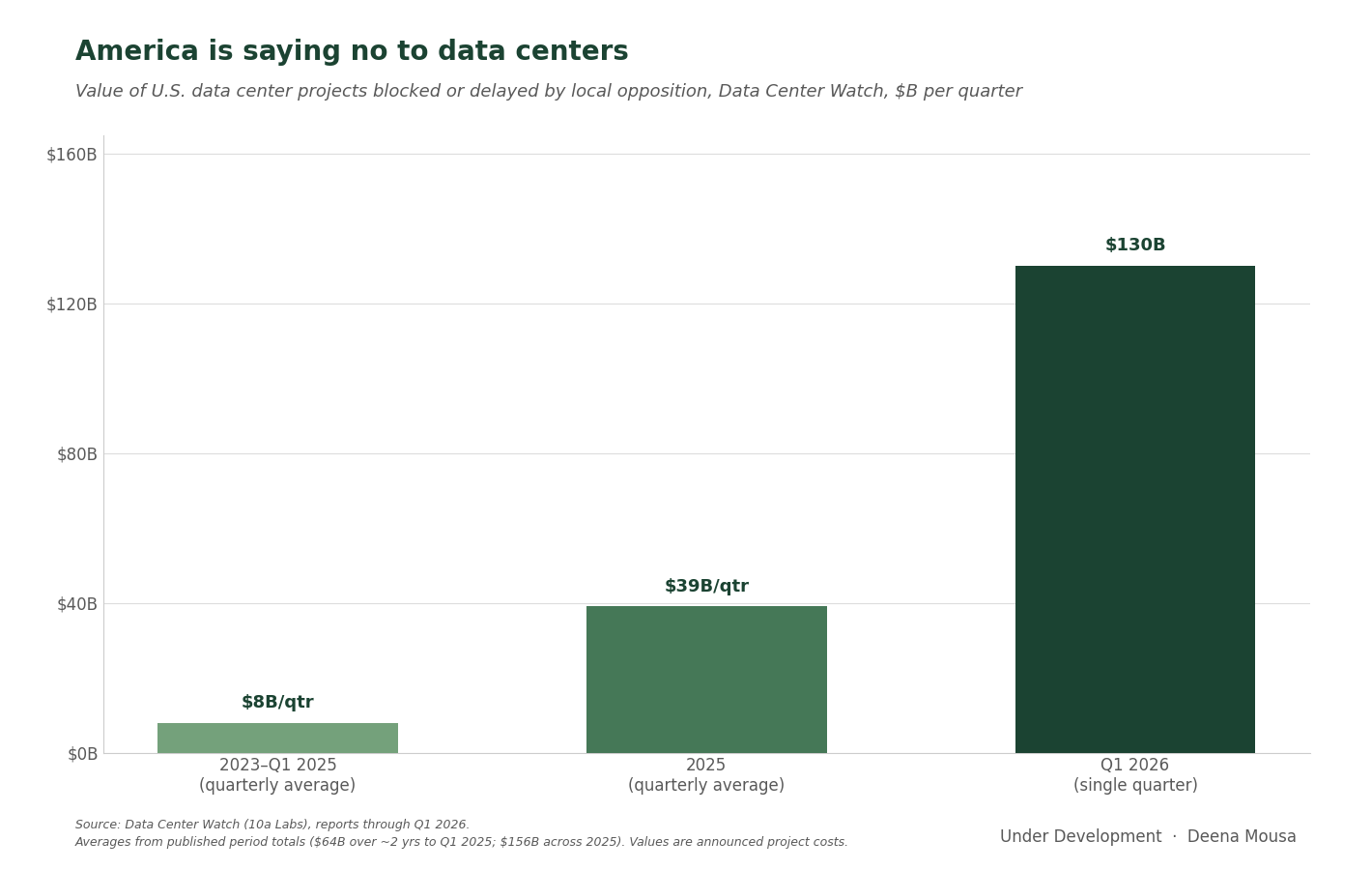
In the United States and many other rich countries, local opposition is building against data center construction. In a recent Gallup survey, 71% of Americans said they oppose having a data center near them, which is higher than for nuclear plants. The number of opposition groups more than doubled in the first quarter of this year; there are now 833 across 49 states. In that time, more than 75 US data center projects worth roughly $130 billion were blocked or delayed amid this opposition, more than fifteen times the quarterly pace of the two years before that. Many local governments have enacted bans, and just last week, New York launched the first statewide data center moratorium. This presents an opportunity for other countries to step in.
Compute is an appealing export because, as AI gets better, it becomes more valuable. Compute also converts things a poor country can’t otherwise sell abroad (like electricity, empty land, and sunshine) into a transportable good. It doesn’t rely on a large workforce with any particular education or skills, and, like other exports, it is purchased in USD or other hard currency.
But this hasn’t worked out well so far, because energy surpluses turn out to be temporary, since poor countries tend to consume their spare electricity as soon as they grow. Ethiopia, for example, legalized bitcoin mining in 2022 and began selling miners its surplus hydropower, earning about $220 million in its best year. But then its own demand increased due to new uses for electricity, which naturally tend to come about as countries get richer, and the grid couldn’t keep up with both. Within three years the country moved to wind down new and existing mining contracts.
For the most part, then, the giant campuses are likely to continue to be built where plentiful power meets deep capital and friendly politics. If US regulations begin to pose an issue, it’s more likely that firms will go to the Gulf than to Ghana.
That said, poor countries can host smaller facilities that can back up their own power. South Africa has roughly three-quarters of the continent’s capacity in spite of a coal grid so unreliable that operators built their own solar farms. They came anyway, since Johannesburg has fiber junctions and a financial sector, and Cape Town has six subsea cables on its beaches.
By that criteria, and for these smaller facilities, the best-positioned countries are South Africa, Kenya (given Mombasa’s cable landings), Nigeria (with eight subsea cables at Lagos), and Egypt (as the crossing point for most Europe–Asia internet traffic).
But this is, unfortunately, not a particularly promising export-led growth path.
Hosting small datacenters mostly isn’t an export in the first place. Over 80% of African data currently lives abroad, mostly in America and Europe — African firms pay foreign providers to host it, an import like any other; Nigeria alone spends an estimated $850 million a year on foreign cloud. Local data centers exist mostly to win that business back rather than to shift to being a net-exporter. For example, central banks increasingly require that financial data stay in-country, and apps respond faster from servers nearby, so the customers filling a Lagos facility are Nigerian banks, telcos, and government agencies. This is useful on its own terms but not the thing we’re looking for.
The jobs are also negligible; a hyperscale campus employs 100 to 200 people. The margins also tend to belong to the operator of the datacenter rather than the host country, which supplies the land, power, water, and often tax breaks on top of that.
Data centers are less like an export growth pathway, and more like infrastructure, like roads. Building roads isn’t really a way to get rich; you get rich on what travels over them — and what travels over these, for now, belongs to high-income countries.
Energy
One simpler proposed alternative to selling compute is selling the energy itself. Practically, this means building solar and wind farms in unoccupied deserts, and then either converting the power into green hydrogen or ammonia and shipping it by tanker, or sending the electricity to rich countries through very long undersea cables.
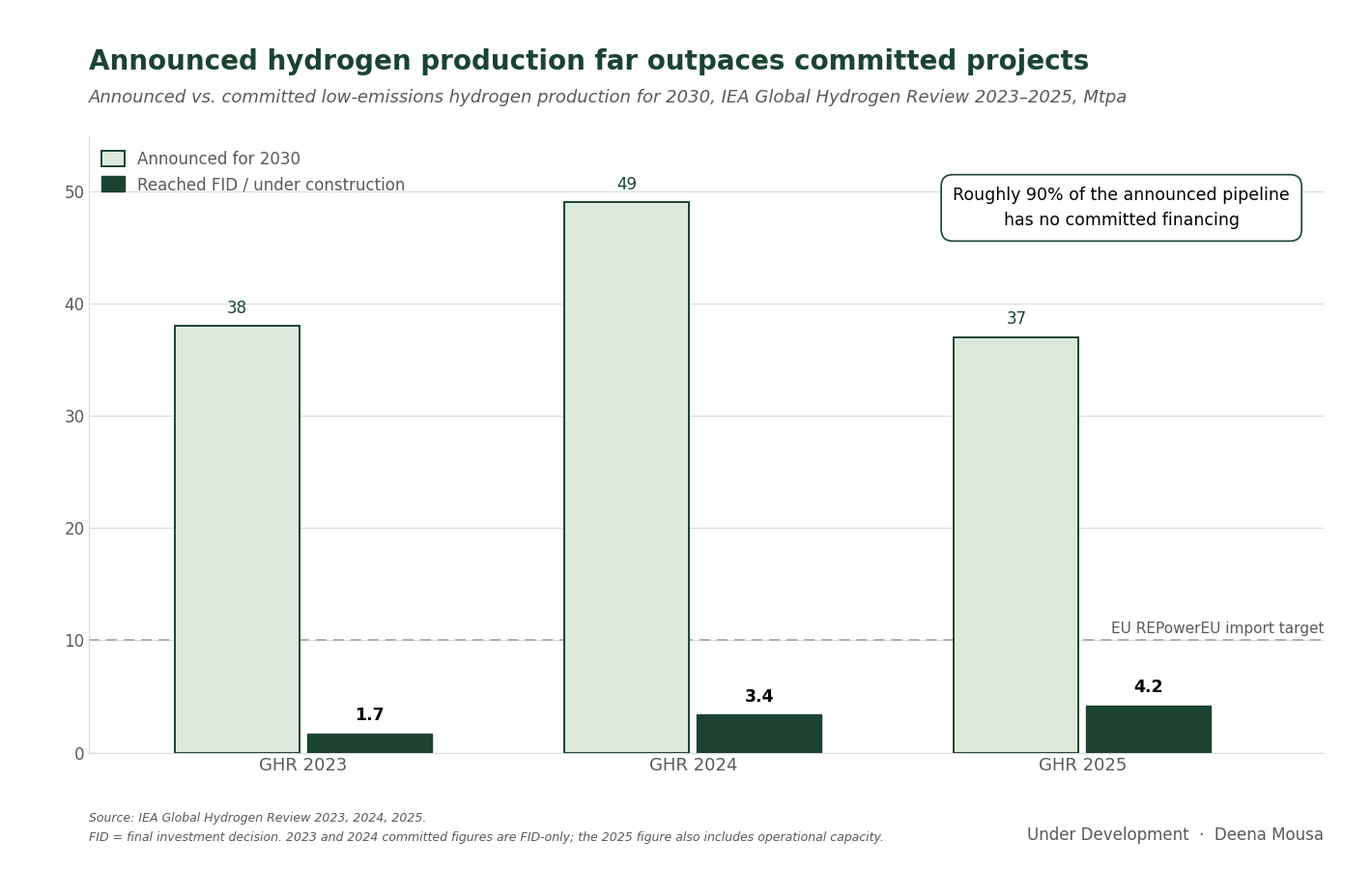
This is a strategy that’s intended to take advantage of a physical endowment. The sun over Africa is more than twice as strong as the sun over Germany, and the EU’s REPowerEU plan targets 10 million tons of imported green hydrogen by 2030.
But demand for green hydrogen is manufactured by regulation that forces shifts to clean energy, and is therefore inconsistent. So far regulation mostly hasn’t bitten; renewable hydrogen was about 0.3% of EU hydrogen consumption in 2023. And so, four years into Namibia’s $10 billion project intended to meet Europe’s stated demand, its cornerstone customer — RWE, one of Germany’s largest utilities — was still only signed to a non-binding memorandum, and ultimately walked away last September.
RWE’s stated reason was that European demand for hydrogen derivatives was developing slower than expected. The IEA’s latest count puts announced low-emissions hydrogen production for 2030 at 37 million tons a year, of which 4.2 million tons (about a ninth) comes from projects that have actually been financed or built. 2025 was also the first year the announced pipeline shrank as projects were cancelled or slipped past 2030.
There is demand for electricity by cable on the other hand, but rich countries are hesitant to import it. Xlinks, a proposed 4,000-km cable from Morocco to Britain, would have supplied 8% of the UK’s electricity at roughly half the price of power from its new nuclear plant. The British government refused to back it on the grounds that it wasn’t “home-grown power.”
There’s one exception, which is to stop trying to ship the energy and instead embed it in something. Economists call this powershoring: relocating energy-intensive industries to places where clean power is cheaper. In April 2025, HyIron’s Oshivela plant began producing green iron in the Namibian desert. Iron production is energy intensive, there is significant demand for it, and it crosses borders freely without as many of the hang-ups energy itself has.
A version of this strategy exists for exporting minerals too. Indonesia captured more of the value of its nickel by banning raw nickel exports in 2020 and forcing smelters onshore. Downstream nickel exports have since grown several times over, though with Chinese-owned smelters and environmental costs.
This is the most promising version of this strategy, and would also reopen the door to manufacturing. But the model is capital-intensive and hard to scale; Oshivela employs a workforce in the dozens where garment factories employed thousands. Cheap energy could bring the factories back but not the jobs they provided, which were critical to their role as an engine for growth.
Labor migration
Finally, one option is a bit unintuitive as an export at first: if the jobs won’t come to the workers, send the workers to the jobs. Practically, this means training people in professions where humans are likely to have some advantage over AI, like relational or physical jobs and helping them get placed abroad. The emigrant captures higher wages, and the country of origin earns remittances in hard currency.
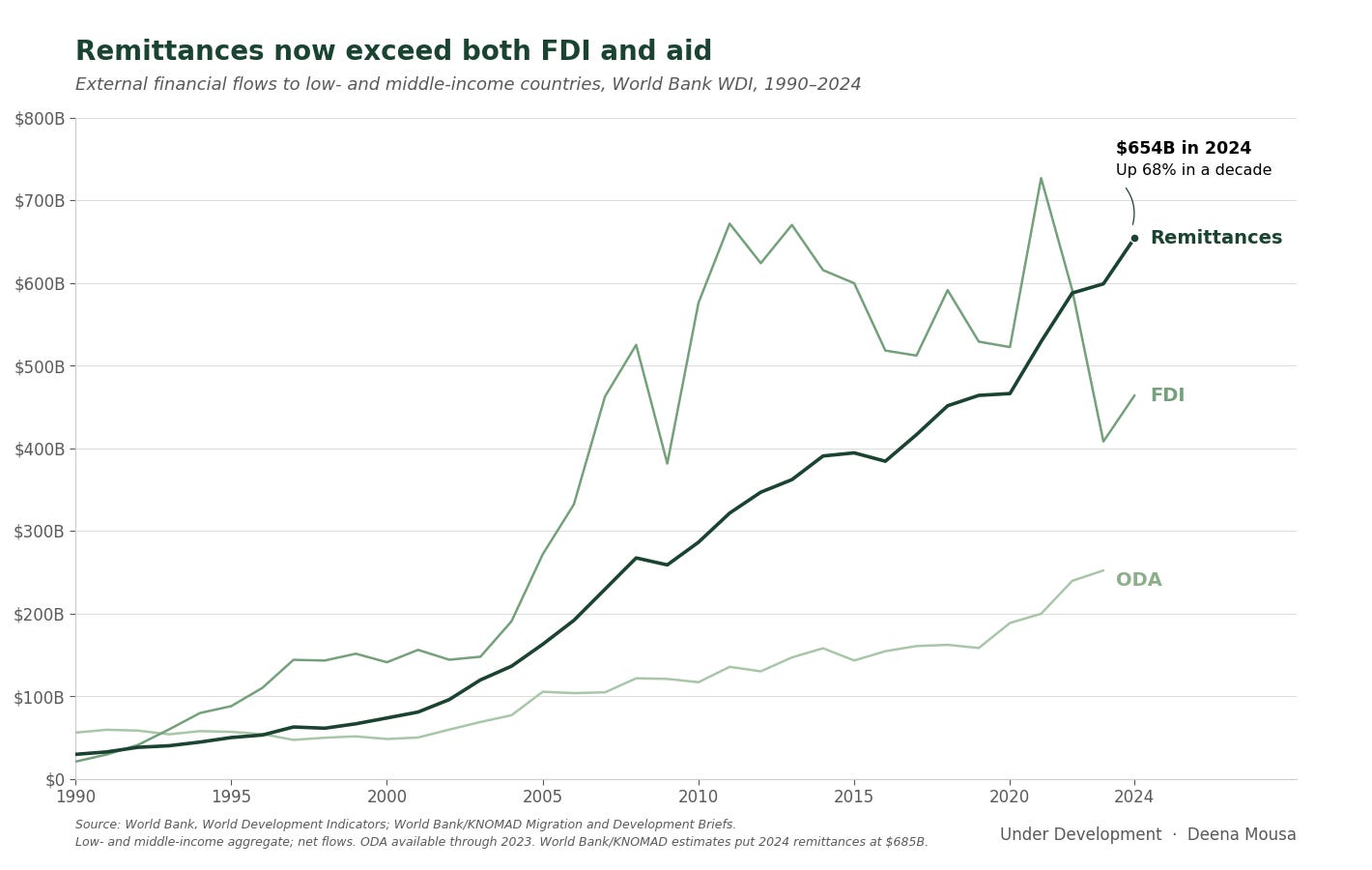
The scale involved here currently significantly outstrips the other proposed options. Remittances to poor countries were about $654 billion in 2024, which is more than either foreign investment or foreign aid. They can reach up to 40% of some countries’ GDP, like Tonga and Tajikistan. They are also much more stable. When COVID hit, FDI to poor countries excluding China fell by more than 30%, but recorded remittances dipped just 1.6%. And while FDI to LMICs has fallen by roughly a third since its 2021 peak, remittances have climbed every year.
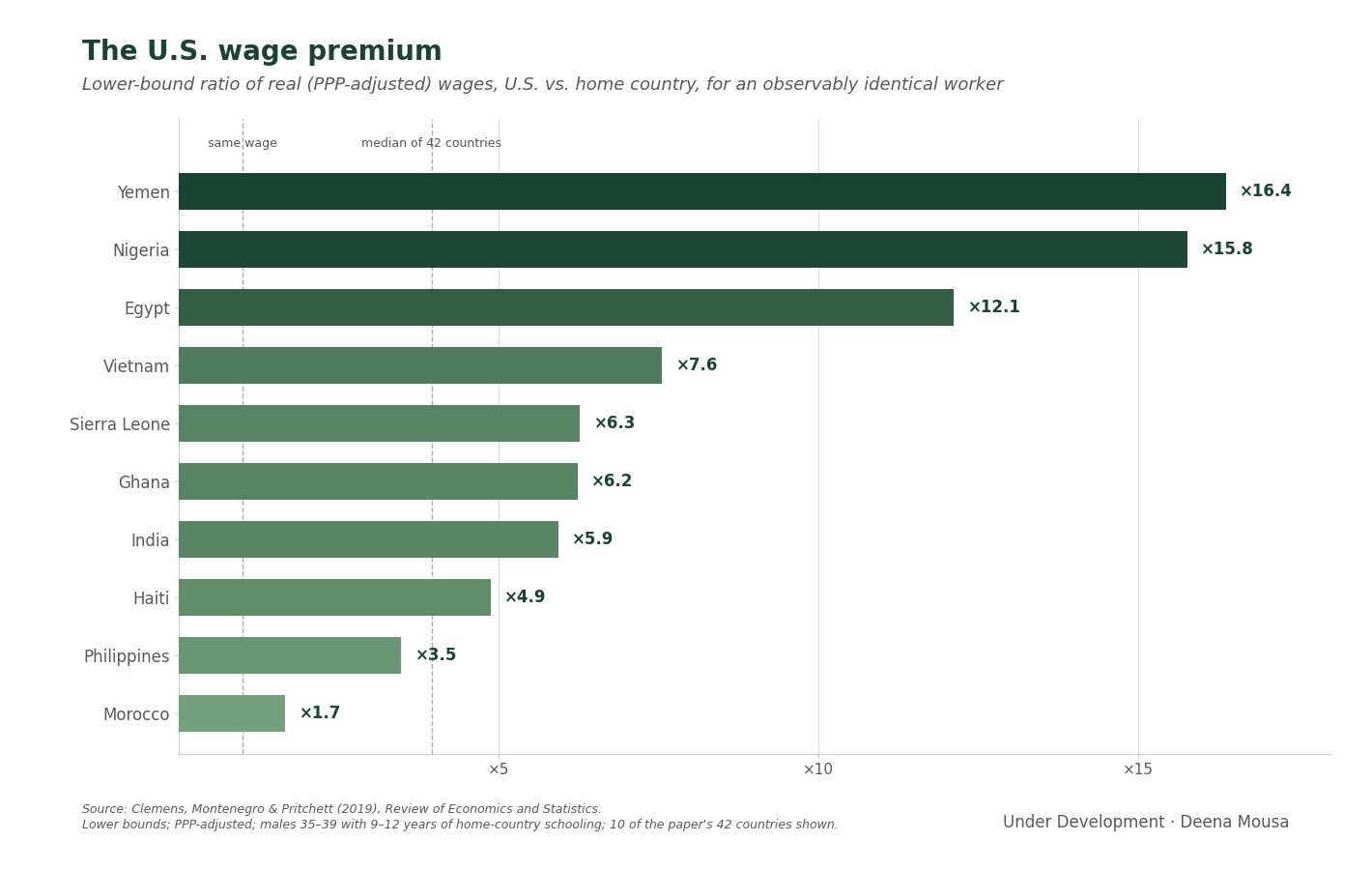
Clemens, Montenegro, and Pritchett compared workers who are observably identical in terms of age, sex, and years of home-country schooling on either side of the US border. Even as lower bounds, the same worker earns roughly 4 times more in the US for the median country, and over 16 times more for Yemen. If AI makes rich countries richer while that embodied work stays human, that premium will only grow.1
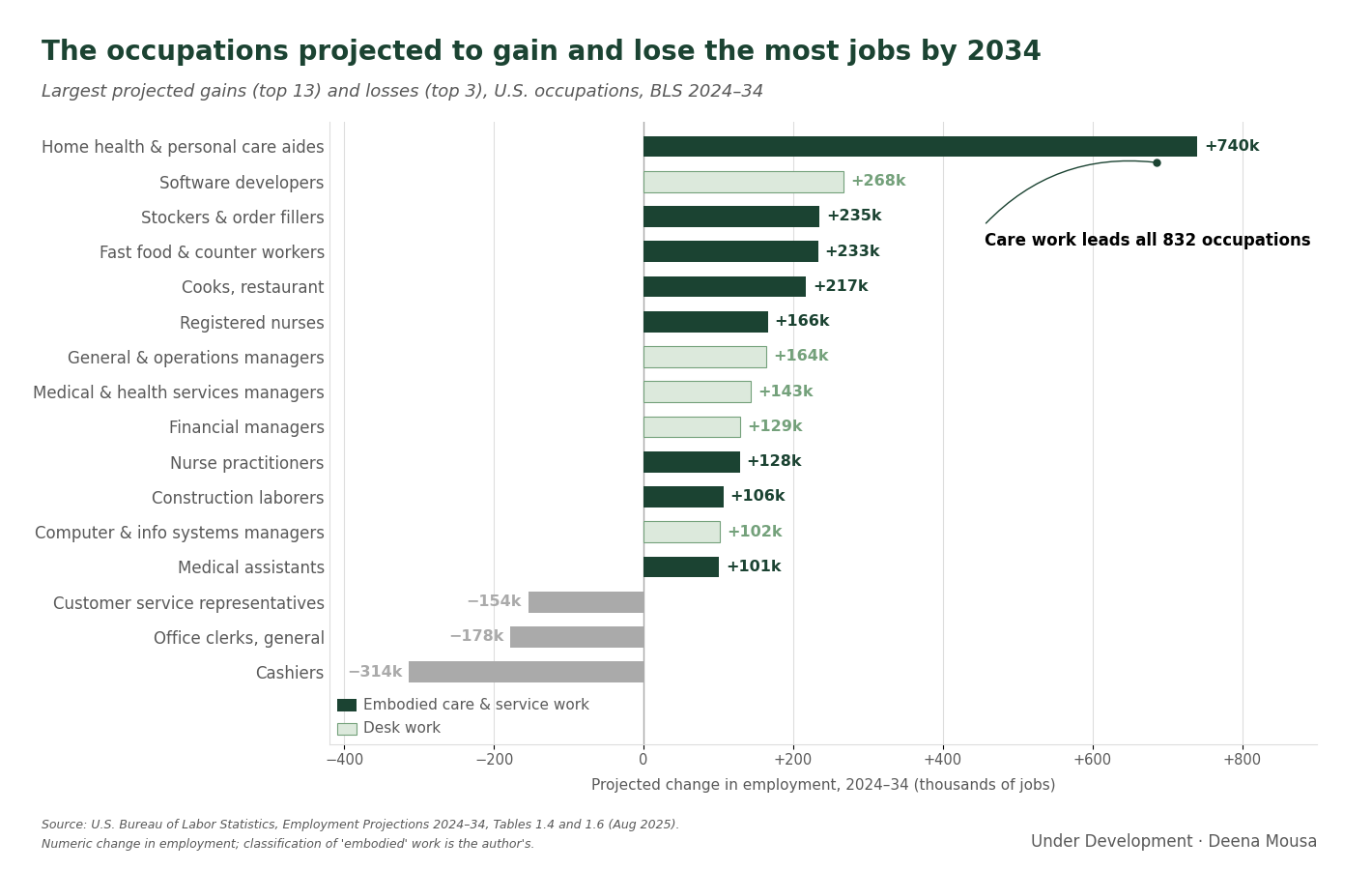
Today, the rich world is aging into a permanent care shortage; the WHO projects the world will need 4 million more nurses and midwives by 2030, and a quarter of practicing US physicians already trained abroad. US government employment projections show that home health and personal care aides are expected to add 740,000 jobs, the most of any of the 832 occupations the agency tracks, and nearly three times the runner-up. Of the thirteen occupations projected to add more than 100,000 jobs, eight are highly physical.
The more successful AI is at automating labor, the richer Americans are likely to get by indirectly capturing the surplus value of AI labs based in those countries. As they get richer, they will naturally demand more and more of these services. You can see this even on a small scale: our demand for childcare, for example, is very far from being satisfied, and many American parents would spend a lot of any extra income they got on more nanny hours. These are already migrant jobs: a third of America’s home care workforce is foreign-born, rising to nearly 40% among home health aides.
There are, however, two issues with this. The first is that, of course, migration pathways depend on the receiving country’s political appetite, which is volatile in a way the demand for labor is not. Britain, for example, opened its skilled-worker route to care workers in 2022 and recruited over 220,000 workers from abroad. However, they were banned from bringing dependents in 2024 and the route to new overseas applicants shut entirely in mid-2025. All the while, the sector was still reporting over 100,000 vacancies. If other work is automated, it’s also possible that more people in other jobs will prefer to switch over to care work, obviating the need for migrant labor.
The other is that migration mostly enriches individual families and has limited evidence as a growth engine. The Philippines has run the world’s largest labor-export program since 1974, and remittances bring in about $40 billion a year (roughly the same as its entire BPO sector earns), but with no corresponding industrial takeoff. This is because remittances are spent mostly on consumption and housing rather than invested in firms, and because large inflows appreciate the currency in ways that squeeze other exports.
There is, however, opportunity for growth in cases where those who move abroad return home. For example, Taiwan’s chip industry was seeded by engineers coming home from Silicon Valley, and India’s IT sector leaned on its American diaspora. All that said, as a means of capturing some of the value of a prospective AI boom, labor migration strikes me as one of the most promising potential avenues for LMICs.
Is there another way to grow?
Historically, export-led growth did three things at once: it brought in hard currency, employed huge numbers of people, and made workers and firms more productive by doing the work itself.
Every proposed alternative fails at least one of these tests. Data labeling earns hard currency, but the work is short-term and the demand that survives is moving toward experts in rich countries. Agriculture employs enormous numbers of people, but that number shrinks as productivity goes up, demand for food is capped, and agricultural processing employs few. Tourism is closed to countries without attractions and capped in the rest in terms of productivity per worker and scale. Data centers that are feasible in many low- and middle-income countries mostly aren’t exports in the first place. Energy exports depend on demand manufactured by regulation, which has mostly failed to materialize.
That leaves labor migration. Making some bet on care work and physical jobs in high-income countries, and earning remittances in return, seems to me like the most promising avenue for many countries. It is also a depressing takeaway, because it gives up on domestic engines of growth and settles instead for trying to buy a stake in growth that happens elsewhere. I hope it’s wrong.
This is a non-trivial ‘if’, but it seems likely that relational care work (e.g., nursing, childcare, elderly care) will be the last of anything to be fully automated because (a) it’s harder for AI to do since it is physical, variable, and reliant on emotional attunement (b) even if we got an AI nanny-robot that was superior to human babysitters there will likely be some lag in acceptability. Also, if we’re in a world where all that work is automated as well, things have gotten crazy enough that most current discussions about the concept of “GDP growth” don’t make a lot of sense anymore.
Great piece!
Obviously agreed on the labour migration opportunity and it's exactly what we're doing with Africa Jobs Fund.
It seems to be an implicit premise in the piece though that export manufacturing won't be possible with AI. I don't think there's a neat direct line from LLMs to the automation of all forms of manufacturing. Certainly automation is growing but tasks that require complex motor skills (like manipulating and sewing fabric to make clothes) ought to still be a viable growth strategy for low-income countries for some time to come.
Also, on the tourism side, just from travelling in Africa, there is certainly some room for productivity gains in hospitality. I don't have numbers to point to, but the gap in output between a worker in a high-end Nairobi cafe and beach restaurant in Mombasa has got to be at least 2x.
Also, fixed endowments are only the limiting factor in a few places (e.g. Rwandan gorillas). But there is a huge amount of natural beauty, wildlife and quality beaches that go un-used across Africa.
So, plenty of headroom to grow tourism across Africa as well! I think the biggest constraint here is often government/infrastructure which make it hard to attract foreign tourists in significant numbers. As shown by the huge premium Rwanda is able to charge to see the gorillas compared to Uganda (and definitely compared to DRC)
Nice (albeit, somewhat depressing!) piece Deena, thanks for writing it. Obviously agree with the potential of labour migration to promote economic development in poorer countries, but with three big caveats.
Firstly, labour migration opportunities are rarely available for the poorest and most vulnerable people. More needs to be done to open up said opportunities: investing in formal up-skilling programmes, creating an enabling ecosystem, and incentivizing recruitment.
Secondly, as you already note, remittances are used for personal consumption rather than broader economic growth. More needs to be done to make countries of destination financially invest in the countries they are recruiting from, building skilling and labour export systems which serve all markets.
Thirdly, there is a risk that countries of origin promote emigration at the expense of workers' rights (see headlines re Kenyan workers in the GCC...). More needs to be done to learn the lessons from the Philippines and India: how to build an export infrastructure that safeguards diaspora while abroad, and harnesses their contributions when they return.